

 Case Study & Feature Article
Beyond the Database: Finding New Possibilities with PAWS
How creative thinking and collaboration can help guide dog programs get more from the technology they already have.
At Guide Dogs of the Desert (GDD), some of our most useful innovations haven’t come from introducing new technology. They have come from looking at the systems we already use and asking a simple question: Could we make this work better?
PAWS, a database designed by Pentagon Computers specifically for guide dog programs, is central to how we manage information across our organization. Like many guide dog schools, we rely on accurate records to follow each dog’s progress, coordinate work across departments, and maintain connections with the people who make our programs possible. But we’ve learned that a database can do much more than store information. With some creative thinking and collaboration, it can also help us rethink the way we work.
One area where we’ve seen this potential is in the everyday tasks that take staff time away from other responsibilities. Medical documentation is a good example. Recording the findings of a dog’s physical examination can be cumbersome, particularly when information must be entered into multiple fields. We began exploring whether we could simplify the process without asking our medical team to change the way they work.
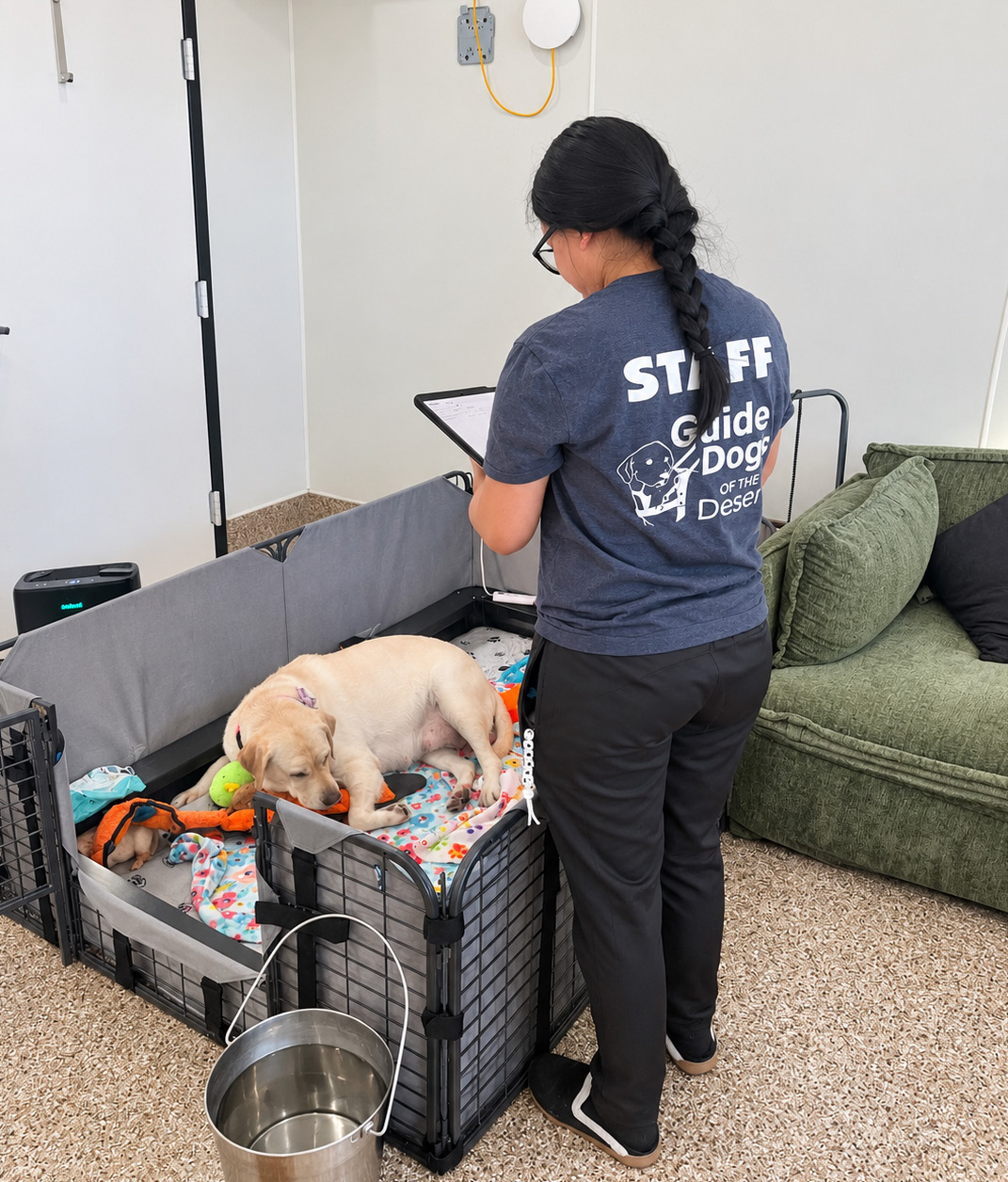
By combining PAWS’s open API with external tools, we developed a voice-transcription process for physical examinations. Staff can dictate information using a phone, tablet, or computer, and the resulting information is mapped to the appropriate fields in PAWS. The documentation can then be uploaded directly to the dog’s medical record. By connecting tools that would otherwise operate separately, we’ve created a more streamlined process using technology we already have.
That same approach—looking at a familiar task and finding a better way to manage it—has influenced other parts of our work, too.
A guide dog’s journey involves many people and departments, from breeding and puppy raising through medical care and training. Each stage contributes information that matters, not only in the moment but throughout the dog’s life. When that information is connected across records, we can preserve the dog’s history, better understand its progress, and make more effective use of the information we’ve collected. PAWS also provides built-in statistical and demographic reporting, helping us turn consistent recordkeeping into information we can use to understand our program.
For a smaller organization like GDD, this is particularly valuable. We need reliable information and efficient processes, but we also have to be realistic about staff time and resources. Finding ways to capture information clearly, consistently, and in the right place helps us get more value from the system without having to build a separate solution for every need.
Sometimes, improving a process also means making it easier for other people to participate. Our puppy raisers are essential partners in preparing future guide dogs, and their updates help us understand how puppies are progressing. We wanted to make sharing those updates as straightforward as possible, so we developed a process that allows reports to be submitted and linked to the appropriate records in PAWS.
“In one month, we received more than three times our usual submission rates. It was a useful reminder that innovation doesn’t always require a complicated technical solution.”
The change made a noticeable difference. In one month, we received more than three times our usual submission rates. It was a useful reminder that innovation doesn’t always require a complicated technical solution. Sometimes, making a process easier is enough to encourage greater participation and give staff better information to work with.
We’ve applied similar thinking to other communications. Applications and alumni update surveys can be distributed electronically, with responses attached to client records. We also use an interdepartmental communication system to coordinate puppy sponsor updates and track their status. Although these functions serve different purposes, they share the same goal: reducing unnecessary steps, keeping information organized, and helping the right people follow through.
Of course, not every need can be met by rethinking an existing feature. Sometimes, we need to develop something new. Our breeding program provided an opportunity to do just that. We wanted to calculate the coefficient of inbreeding (COI) for specific mating partners using Wright’s Formula. Pentagon Computers worked with us to incorporate that calculation directly into PAWS. This allows us to keep a specialized capability within the system we already use and connect it with our broader breeding records.
That brings us to another important part of our experience: the people behind the technology.
Our relationship with Pentagon Computers has been about much more than purchasing or maintaining a database. We’ve spent countless hours brainstorming with their team, talking through challenges, exploring what PAWS can already do, and considering where additional development might help. They approach these conversations with warmth and enthusiasm, and they are willing to work with us to turn ideas that emerge from our day-to-day operations into practical solutions.
That kind of collaboration matters. We know our program, our people, and the challenges we encounter. Our technology partner understands the system and helps us explore how it can meet those needs. When those perspectives come together, a problem that initially seems like a limitation can become an opportunity to improve a process or develop a new capability. PAWS has continued to evolve alongside our program, rather than requiring us to fit every need into a fixed way of working.
We’re still finding new possibilities. Each time we encounter a cumbersome task or wonder whether information could be captured more effectively, we have another opportunity to ask what might be possible. Our experience has shown us that innovation doesn’t have to begin with a major investment or an entirely new technology. It can start with a practical question, a willingness to look at familiar processes differently, and a collaborative conversation.
For other guide dog programs, especially those working with limited staff and resources, it may be worth taking a fresh look at the tools already in place. Where does information become fragmented? Which tasks take more time than they should? And what might be possible if your technology provider understood not just what your system does, but what your team needs it to do?
For us, PAWS has become more than a place to keep records. It has become a way to solve problems, connect information, and continue improving how we work. The biggest lesson may be that innovation isn’t always about finding the next new thing. Sometimes, it’s about recognizing the potential in what you already have—and working with the right people to bring it to life.